
Half Ass
Nepali Times ईspecial 26 June - 2 July 2026 #1317
Sorry for being two days late this week with my usual Sunday morning musings in this ईSpecial Newsletter. I am typing these words with one eye as the other one recovers from a cataract procedure. Which may be why I can only offer a half-assed Substack post.
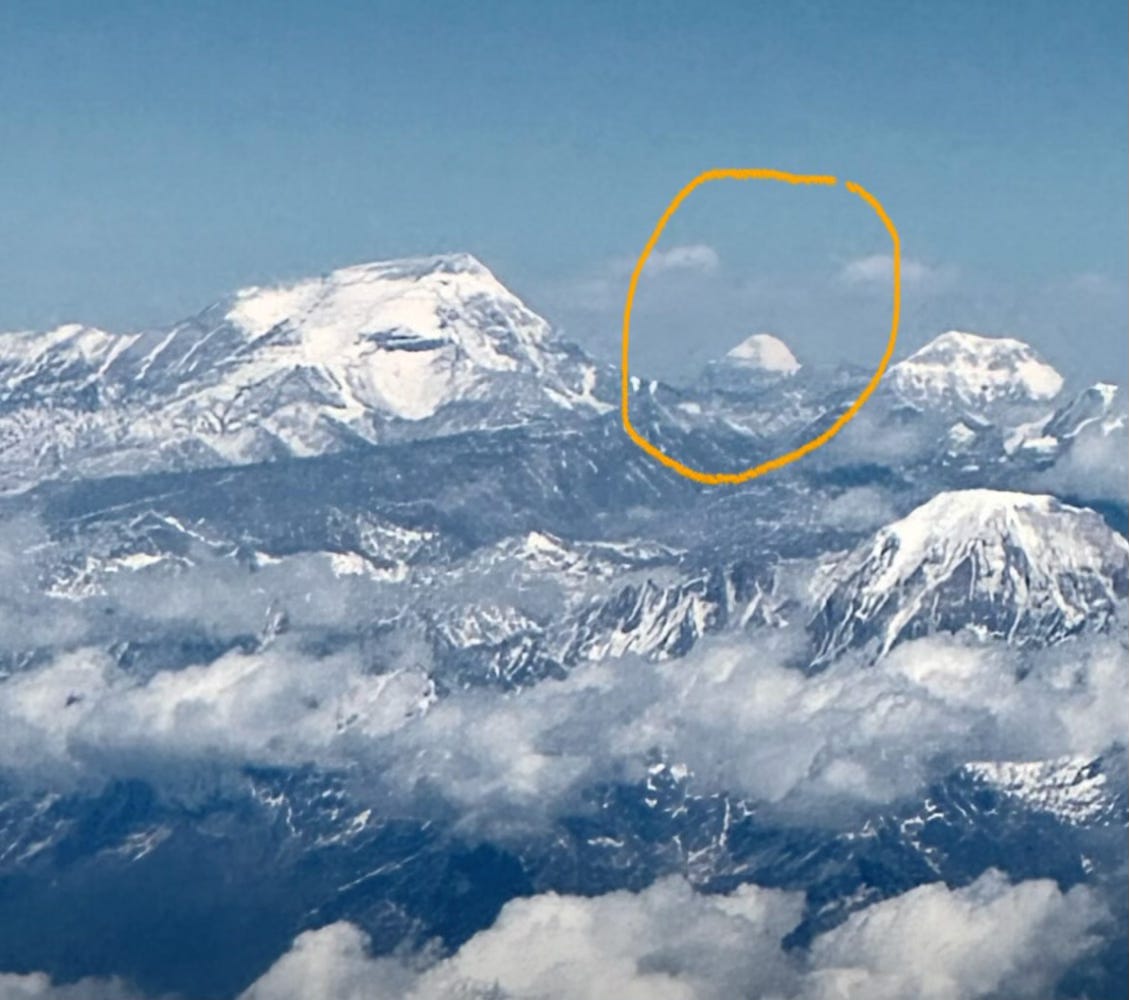
But before we get into the nitty gritty of what is happening back in Nepal, let me share this amazing कैलाश दर्शन I had last week of Mt Kailash as seen from nearly 300km away on a westbound plane from Kathmandu. The sacred mountain is flanked by the broad summit ridge of Gurla Mandhata (7,694m) that overlooks Lake Mansarovar in Tibet. Api Saipal Range (7,031m) in Nepal is in the foreground.
Meanwhile, not is all quiet on the western front. In fact, it’s World War I all over again in Nepal as France and Germany battle it out. (We are not talking about the FIFA World Cup Knockout Round here.) No, they are locked in trench warfare over a contract to print new machine-readable passports for Nepal.
The frontlines have shifted back and forth over the past two years in this battle of attrition. The two European companies are duelling it out with their proxies in Kathmandu, and the long and short of it is that there is only a three week supply of passports left.
If your passport is running out of pages (like mine) or has expired (passport, not person) then it may already be too late to get a new one. All this coincides with the Indian government’s pronouncement that a passport is just a travel document and not proof of citizenship. Shhh! Don’t blurt this out to anyone in the PM’s inner circle.
The fallout of the passport crisis is just the latest visible sign of policy and procedural differences between Prime Minister Balendra Shah and Party Chair Rabi Lamichhane. The PMO is pushing hard to reinstate the French company, while MoFA under Lamichhane appointee Minister Shisir Khanal say the Germans have a stronger legal case.
There is never a dull moment these days with the antics of the RSP. The story of the week was that Homie Minister Sudan nearly choked on fish bones that had allegedly, inadvertently, reportedly found their way into the omelet he was dining on at a Chitwan hotel during the party convention. Sabotage was immediately suspected, and the kitchen staff at the hotel were promptly arrested, just like the CEOs, Captains of Industry, Government Secretaries, and the former Finance Minister. And then set free for lack of evidence. RSP obviously believes one cannot make an omelet without breaking a few eggs.
PM BS’s remarks at the Chitwan convention — that the RSP was “on the expressway and we will hit the brakes only when we get to the destination”— were cheered by supporters, while others saw it as another sign of reckless DUI. Cartoonists had a field day. To fend off criticism, the government announced Rs50,000 fines for traffic violations, which was immediately countered on social media with posts saying the government should be fined Rs100,000 for not patching potholes.
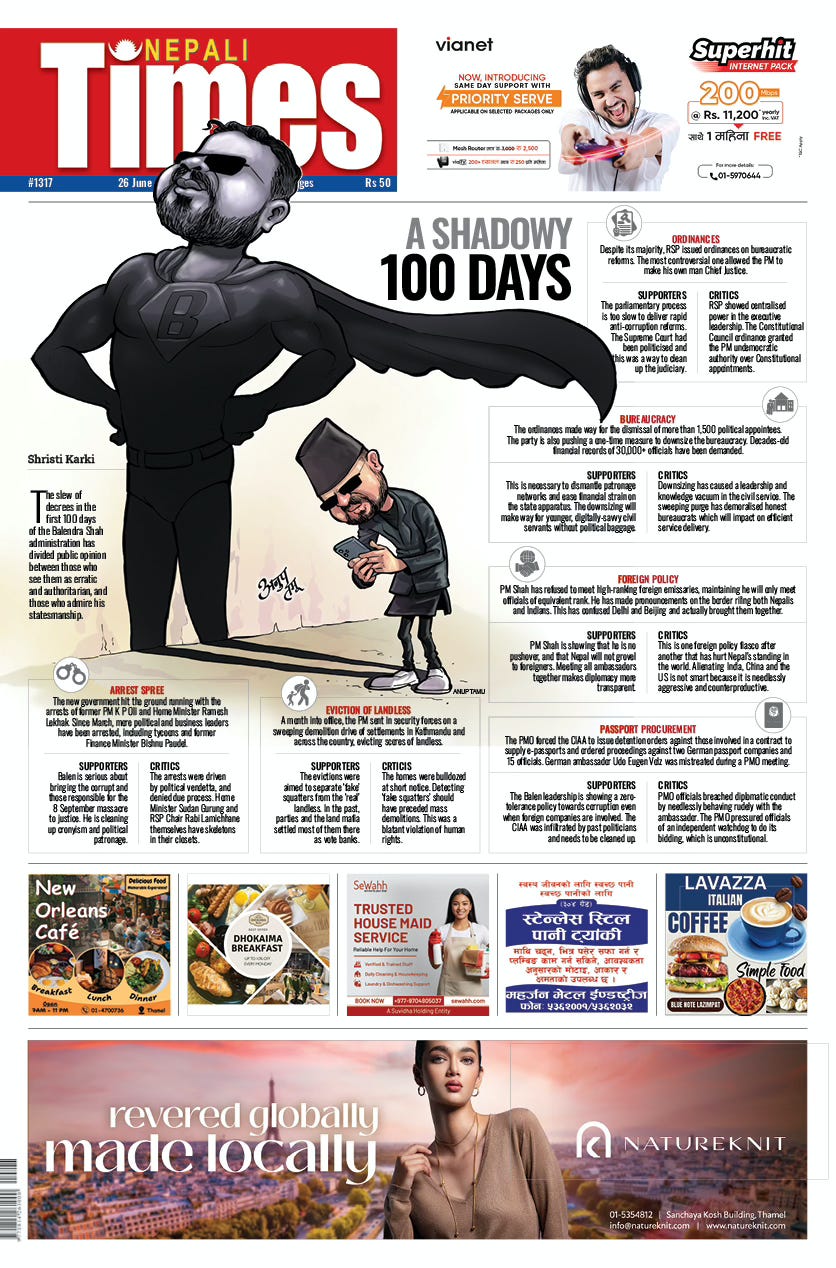
And that is the story of the past 100 Days of Balen Sarkar that has polarised Nepalis. The pros and cons, the feats and faux pas are expertly summarised on page 1 by Shristi Karki (A Shadowy 100 Days). Go online to watch Anup Tamu’s animation of how he sketched that revealing front page cartoon.
Editor Sonia Awale also evaluates the past three months of the RSP government and concludes that that it is (to paraphrase Shakespeare) ‘a lot of sound and fury signifying not much’. When the hurly burly is done, all we have is bluster and gimmick skilfully propagated through social media to appeal to the domestic gallery that applauds ultra-nationalist bravado and not performance. (Editorial, page 2). And the old parties will never learn: the Communists have all got together (again) to set up a unified front with the same old superannuated septuagenarians.
The southwest monsoon is not just late, but precipitation has been 50% below normal for end-June in most of the Subcontinent. Read Anju Pandit’s assessment on National Paddy Planting Day on 29 June of how Nepal should adapt its farming methods to the changing climate (When the Monsoon Cannot Be Trusted, page 4).
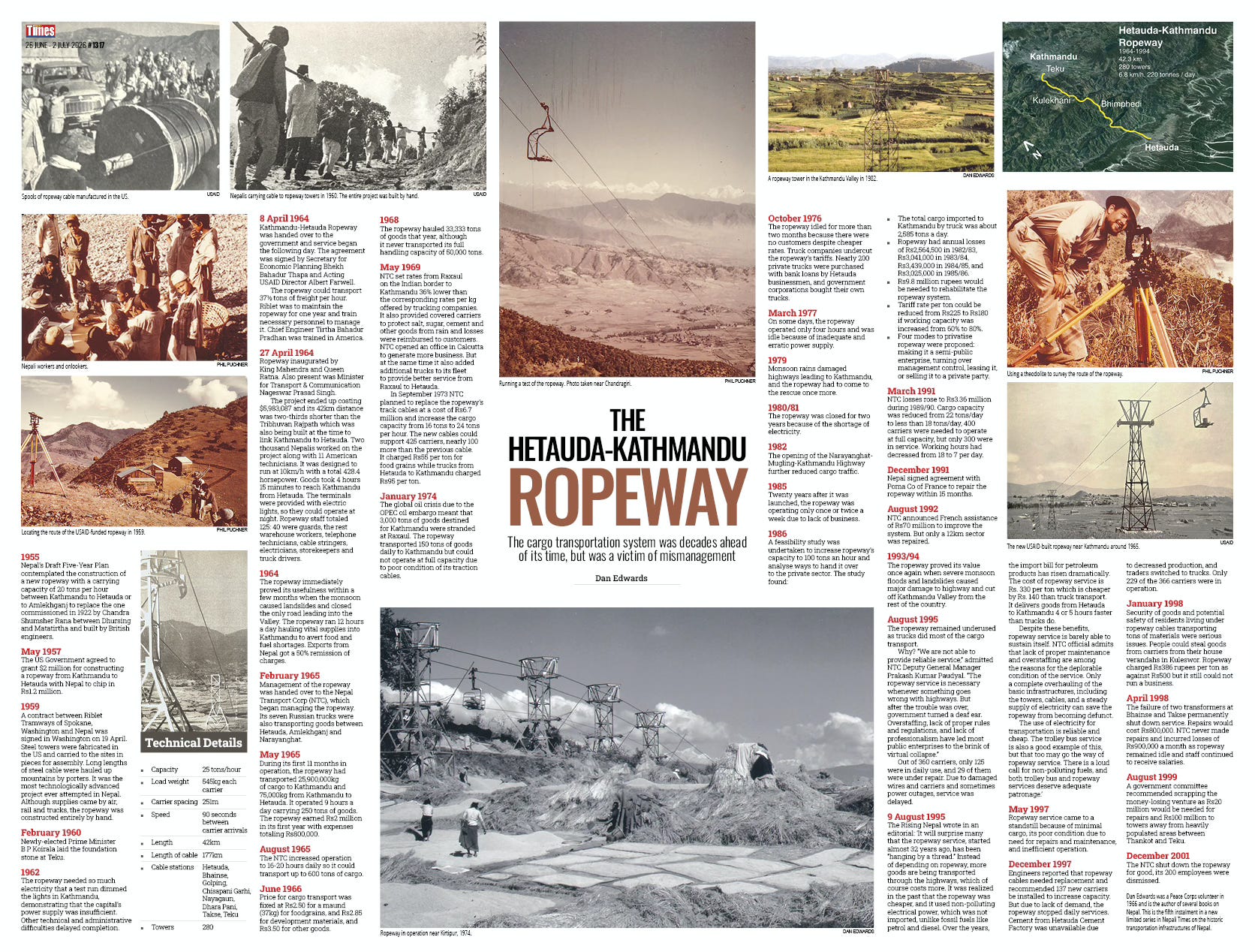
In the lastest installment of his series on Nepal’s transportation history, Dan Edwards takes us down memory lane with period photographs of The Hetuada-Kathmandu Cargo Ropeway (page 6-7).
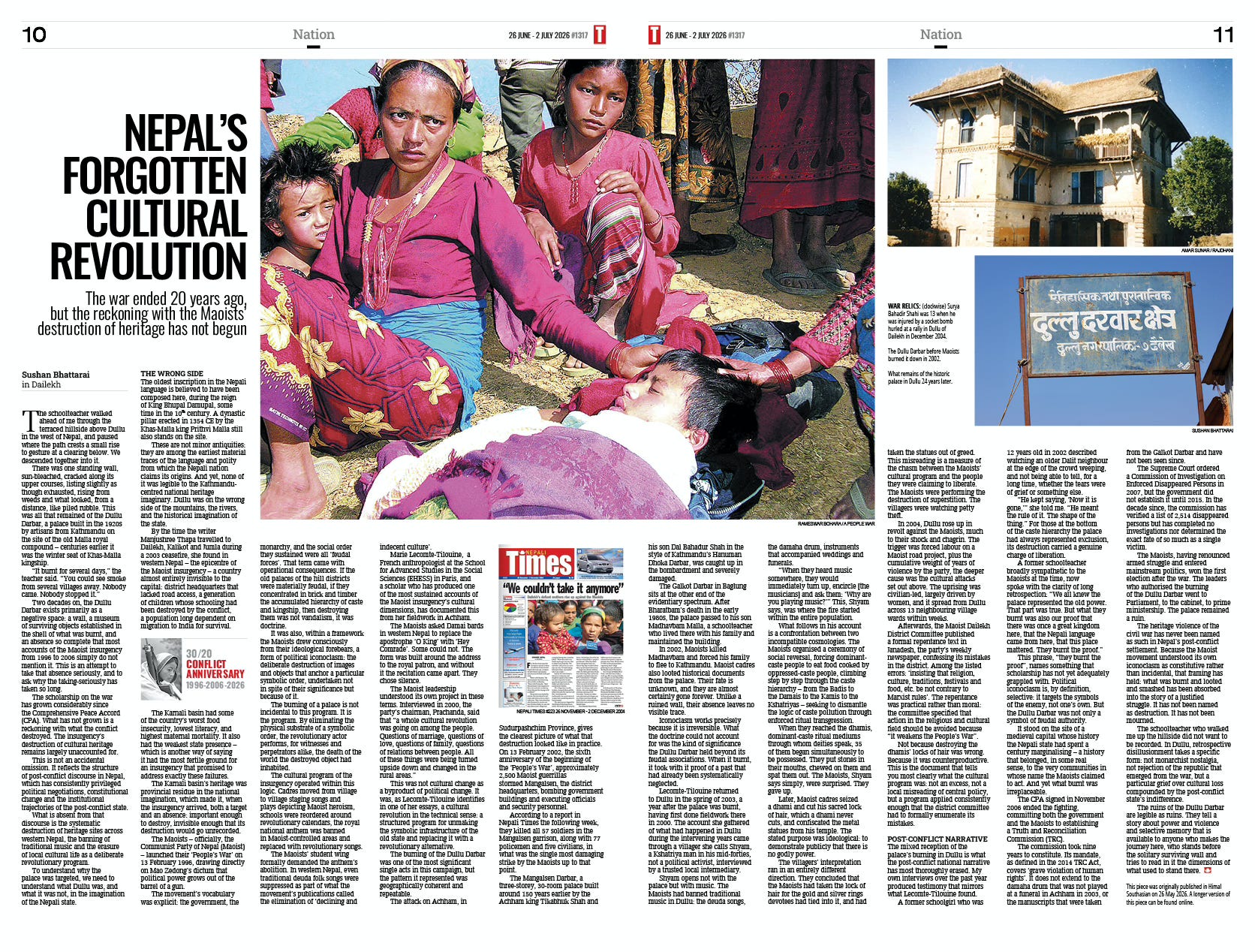
It is 30 years since the Maoists launched their armed struggle and 20 years since the ceasefire in 2006. Sushan Bhattarai travels to Dailekh to uncover another little reported facet of the insurgency — the destruction of culture and heritage by the Maoists, and the women-led uprising against it photographed by Rameswar Bohara (Longread on pages 10-11: Nepal’s Forgotten Cultural Revolution).
Lots of other interesting stuff this week that that newsroom back home has put together:
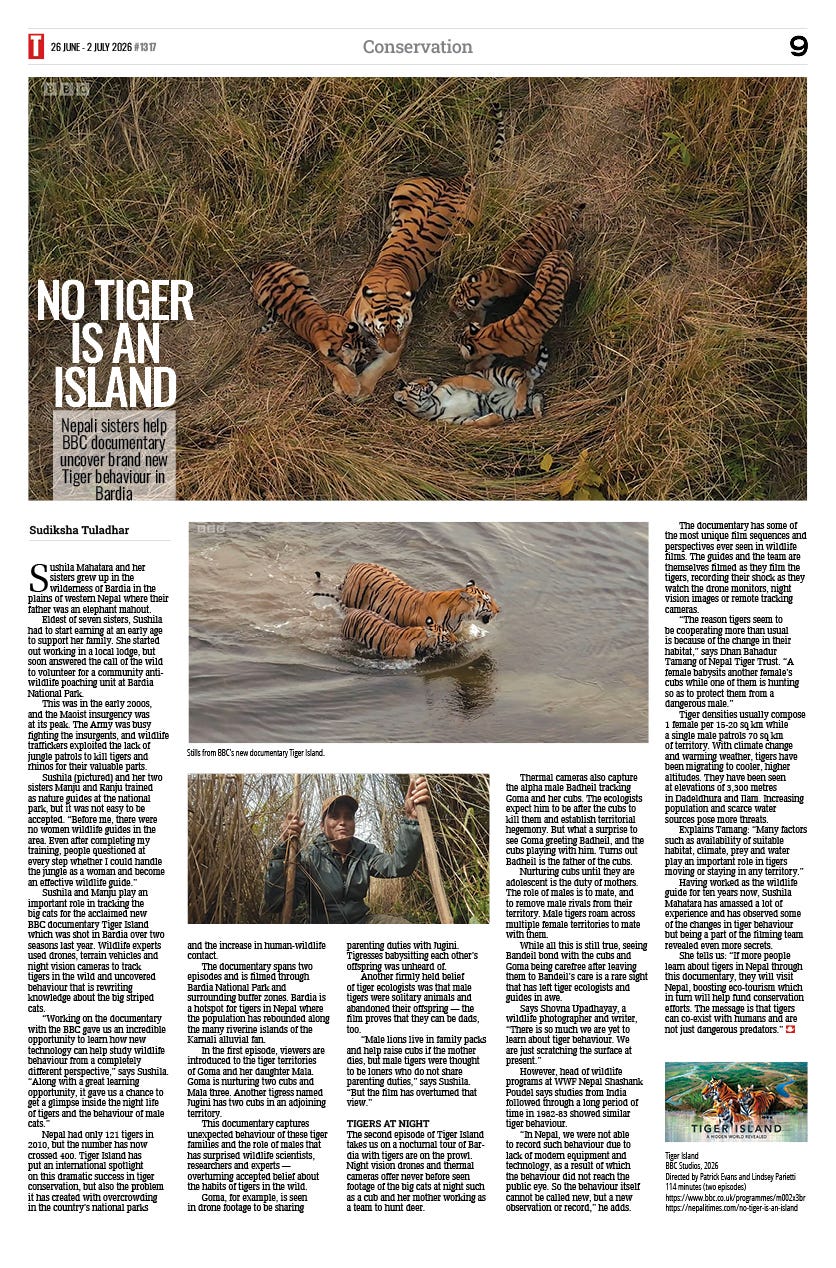
Profile of Mahatara sisters who are part of the team that filmed the BBC documentary Tiger Island in Bardia revealing behaviour patterns that have rewritten findings about tiger ecology. (No Tiger Is an Island, by Sudiksha Tuladhar, page 9)
Two Nepali students who met at MIT have launched an AI startup that has secured venture capital. (Kathmandu Valley To Silicon Valley, page 5)
And three noted Nepali photographers (Kishor Sharma, Uma Bista and Sagar Chhetri) exhibit at the prestigious gallery at Lonato del Garda in Italy.
Hope to be back next week with 20/20 vision in both eyes.
Kunda Dixit