
Meme Movements
Nepali Times ईspecial 21 - 27 November 2025 #1286
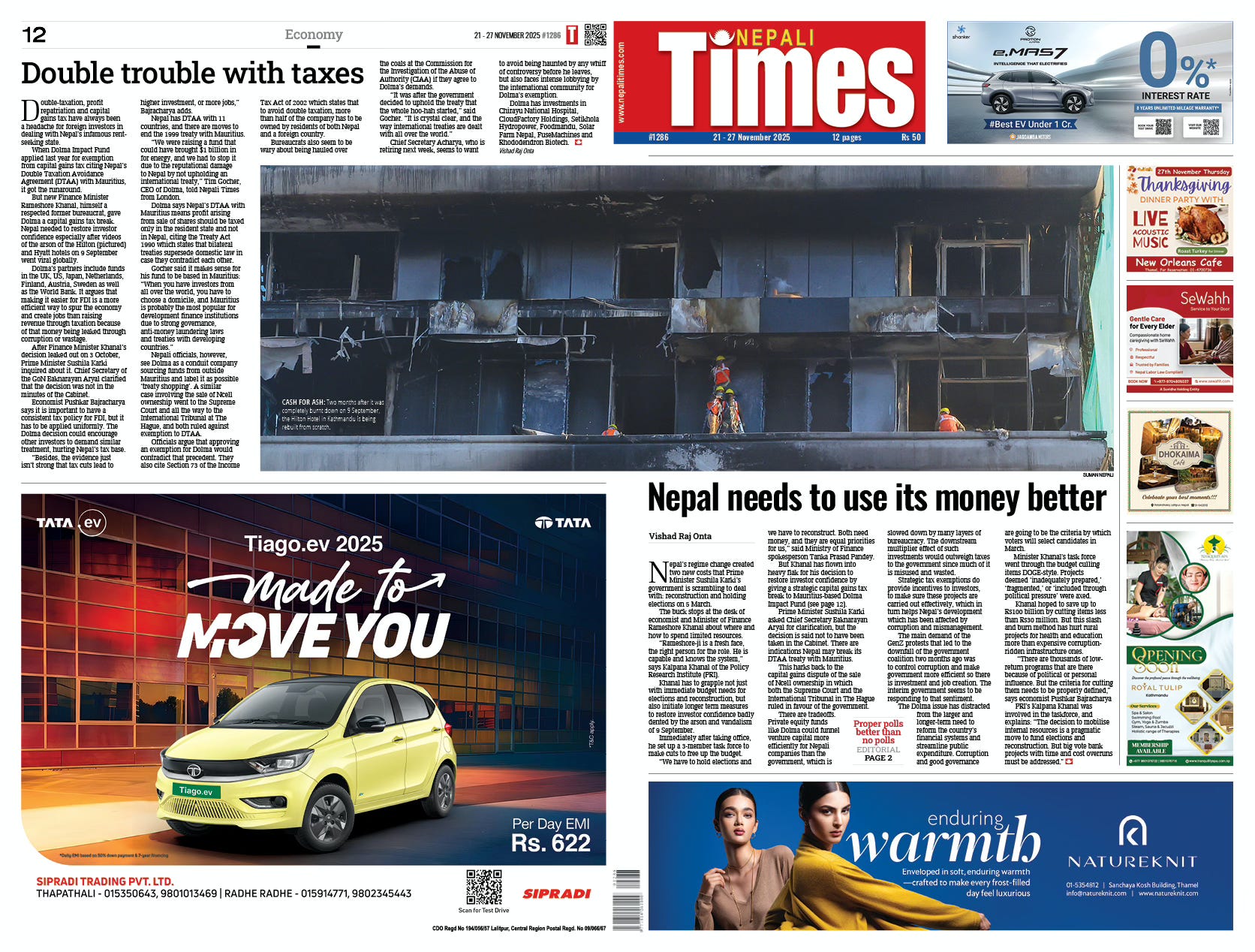
Jai Nepal.
Nepal’s prime ministers for the past 35 years have promised to turn the country into either Switzerland or Singapore, or both. What they meant was that they could stash cash in Swiss banks while the living standard of Nepalis approached that of Swazis.
On Singapore, we have overshot the target. Nepal’s average GDP per capita is now three times higher than the village of Singhapur in Udaypur district (population: 738).
Good thing interim Prime Minister Sushila Karki has not yet boasted about Nepal leapfrogging from Turd World status next year to become Sweden by 2030. But she could get Mayor Balen to take a tip from Singapore and turn Kathmandu into a ‘fine city’.
We do not want to become a penal colony, and there is no way Kathmandu Metropolitan City can fine misdemeanours when they are so common: everyone jay-walks, everyone litters and no one flushes the toilet.
We need a different tack: how about rewarding those who flush the toilet even when there is no water? We can identify them by installing cctv cameras in the loo. Instead of spot fines on those who litter, how about paying those who are caught using the trash can? A prize works better than a penalty.
There can be a cash prize for the only pedestrian who actually used the overhead walkway in the last fiscal year at Labim Mall. And since the interim government’s main agenda is to curb corruption, let us confer the Honest Dalal Award to the middleman who was caught in flagrante refusing backsheesh for expediting driving licenses.
Prime Minister Karki has been meeting stakeholders with single-minded focus to hold elections by 5 March. But things have not been easy this week. K P Oli and Durga Prasai are on the warpath, UML and GenZ clashed in Simara, and all this could be a sign of things to come as campaigning heats up. But, as Correspondent Shristi Karki says in her Editorial on page 2, failure to hold elections is not an option for the interim government. The alternative is unthinkable. (Proper Polls Better Than No Polls)
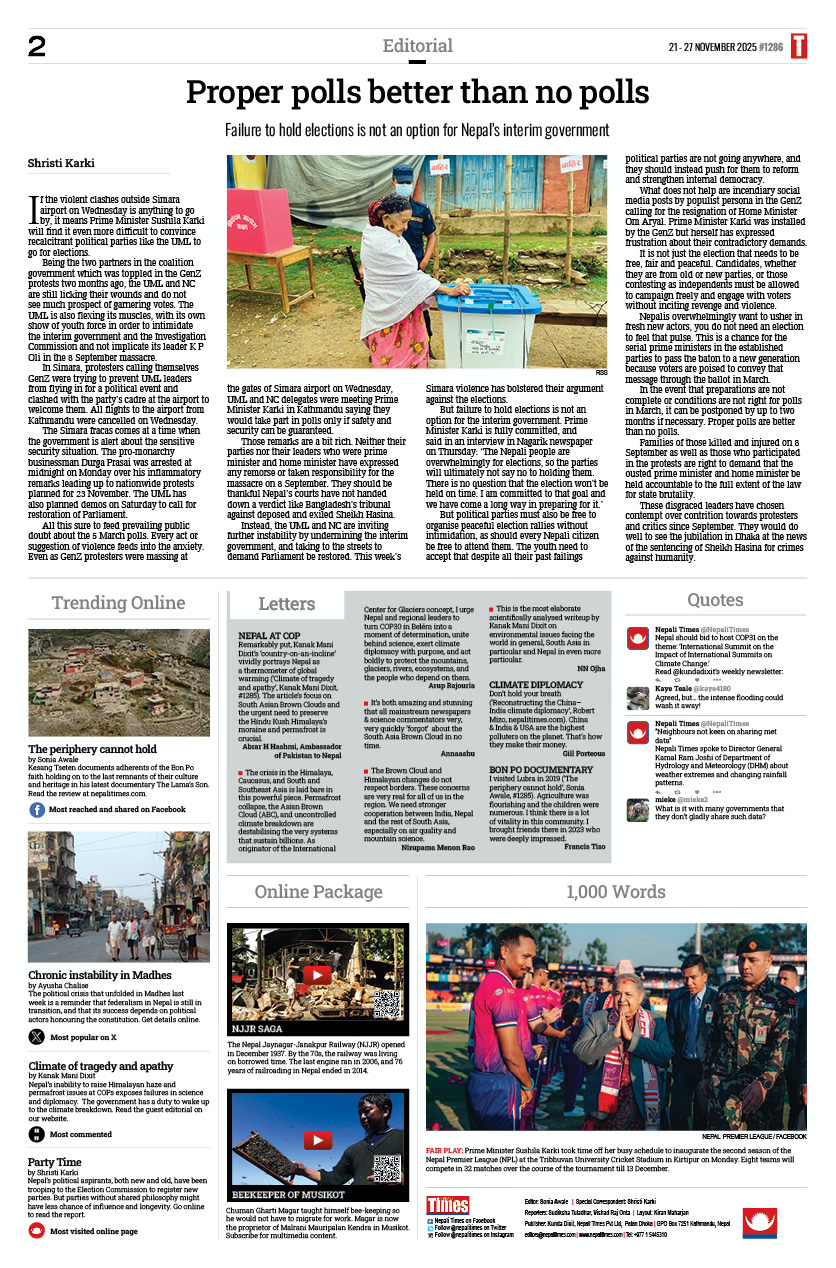
Finance Minister Rameshore Khanal is a competent technocrat with integrity, but some of his recent decisions have created waves. His first move as minister was to slash all small projects below Rs30 million from the budget — DOGE style. But this meant rural health and education schemes got axed while larger corruption-ridden infrastructure projects went ahead.
Read Nepal Needs to Use Its Money Better on page 1 by Vishad Raj Onta, who also brings up to speed on the controversy surrounding the double taxation exemption that Minister Khanal gave to Dolma Impact Fund (Double Trouble with Taxes, page 12).
One of the projects Dolma tried to fund was a 150MW solar farm in Mustang which was axed because of Chinese sensitivities. Then a Chinese investment in a $190 million solar energy plant in Banke and Kapilvastu was shot down after Indian objections. Editor Sonia Awale investigates how Nepal’s attempt to diversify away from hydroelectricity generation is stymied by geopolitics. (Nepal, Here Comes the Sun, page 10-11).
Geopolitics is also why India and China do not share meteorological and other data. Nepali Times interviewed Kamal Ram Joshi of the Department of Hydrology and Meteorology about Nepal’s efforts to mitigate risk from climate breakdown (“Neighbours Not Keen On Sharing Met Data”, page 11).
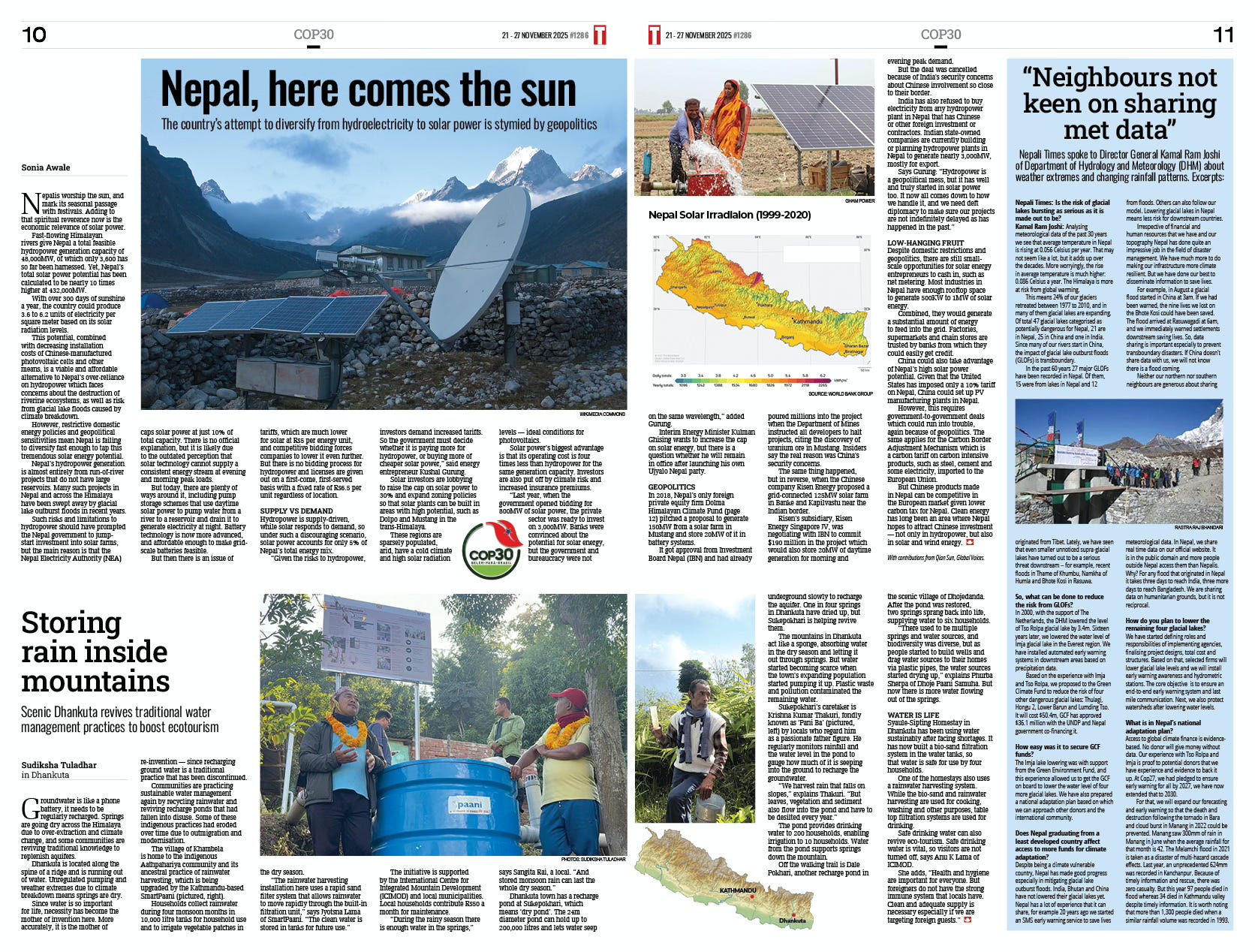
In another COP30-related coverage, Sudiksha Tuladhar takes us to Dhankuta where local communities are reviving traditional ponds to recharge ground water so natural springs do not go dry (Storing Rain Inside Mountains, page 10-11).
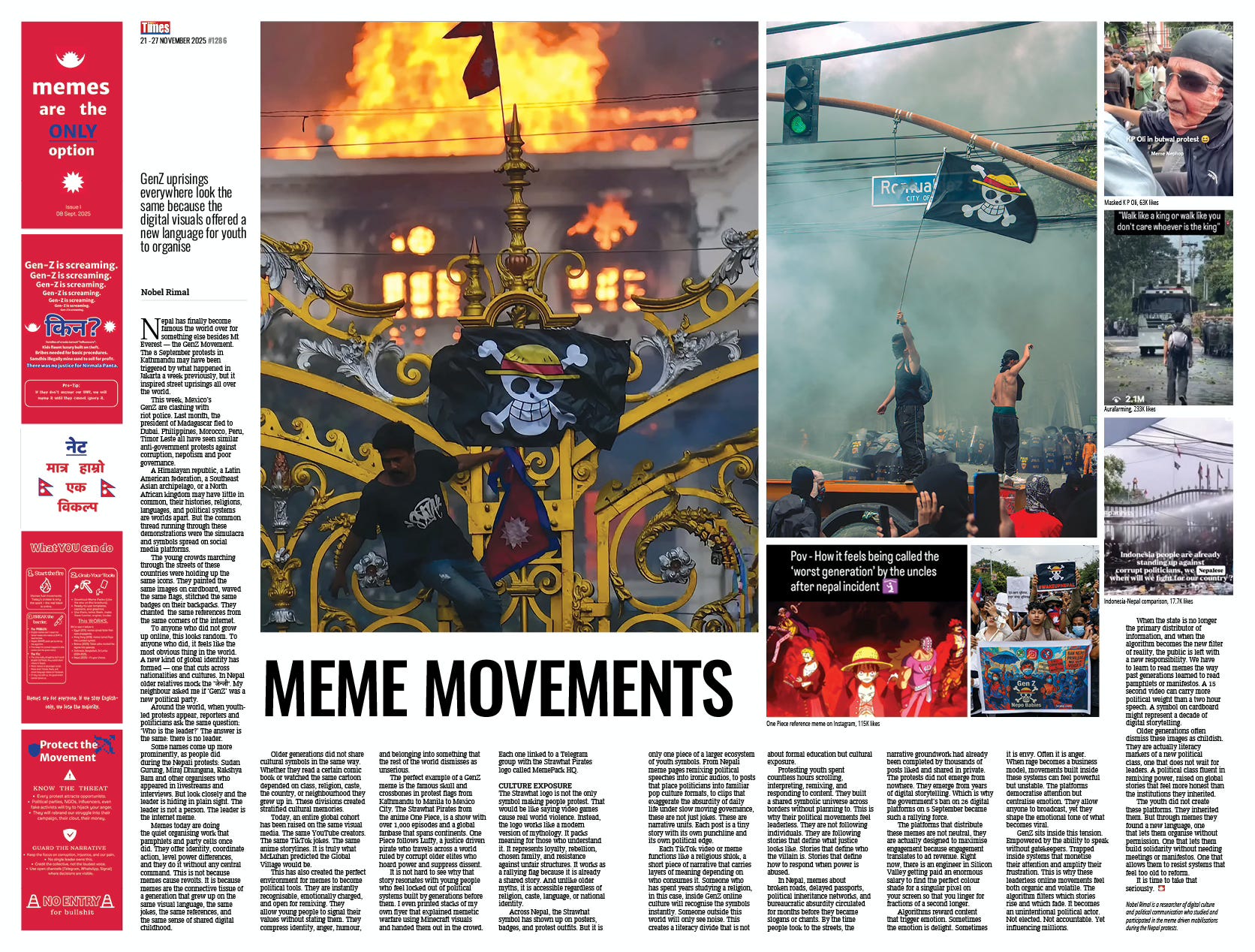
In the centrefold, Nobel Rimal, who was a participant in Nepal’s meme-driven GenZ protests in September, presents an overview of how digital visual images spread like wildfire through cyberspace, igniting the youth revolt in Nepal and across the world (Meme Movements, page 6-7).
Enjoy Nepali Times in print and much more content online.
Kunda Dixit