
Nepal's Golden Age
Nepali Times ईspecial 28 November- 4 December 2025 #1287
Hello Loyal Reader (or, er, Royal Leader?)
The average Nepali is so obsessed with which politicians stabbed each other in the back, that we forget that none of that really matters as long as the economy is not going anywhere fast.
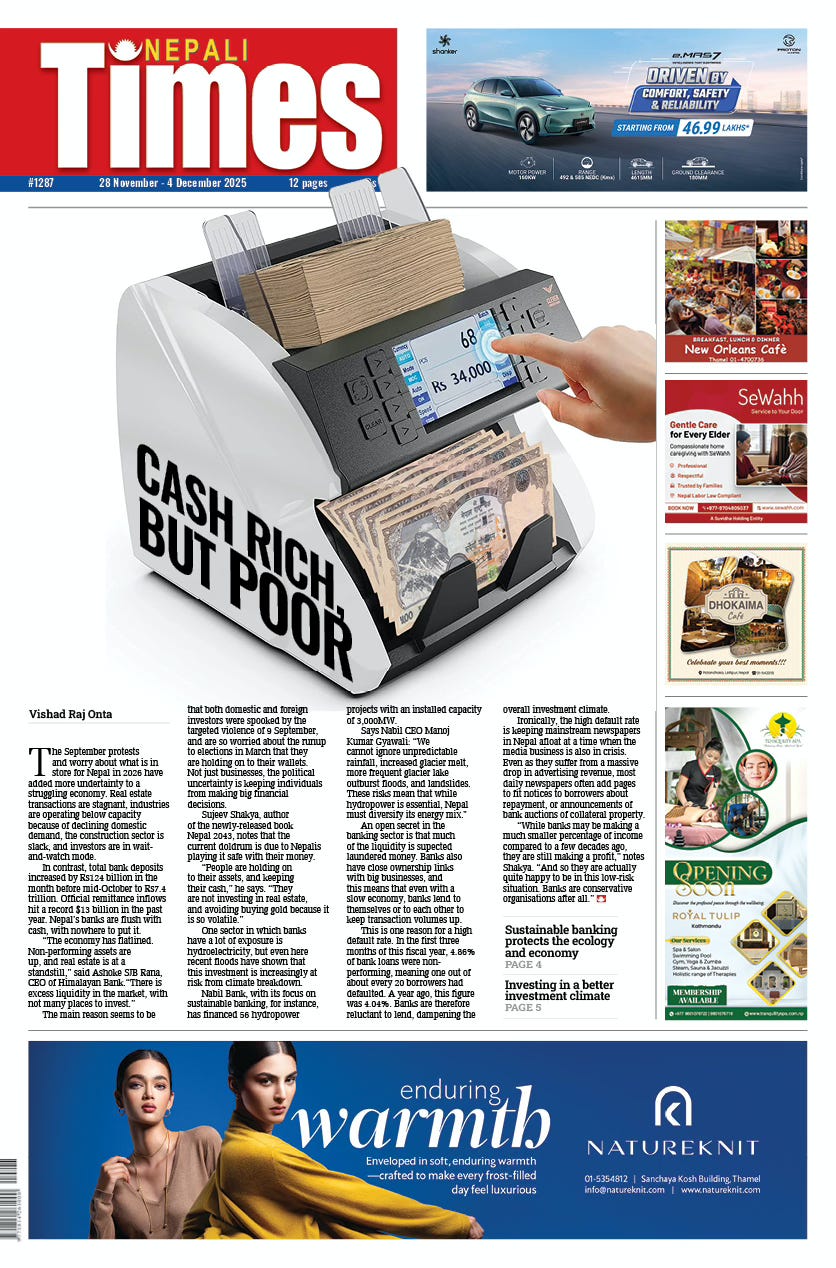
It is a paradox: banks are overflowing with cash, they are still posting profits, officially remittances from Nepalis overseas hit a record $13 billion this past year (counting hundi it is probably double that), but the economy is stagnant, there is no new investment, little employment generation, and no one is borrowing.
Here are a few unsolicited tips on how to narrow Nepal’s balance of payments deficit with India:
Gold price this week hit Rs250,000 per tola. Since Nepal’s economy has historically depended on importing gold bullion and sneaking them into India during the wedding season, we should legalise smuggling. Let’s re-export gold biscuits to pay for import of Digestive biscuits so Nepal can enter a Golden Age.
Nepal has turned from a rice exporter to a net importer. But look at the bright side: we are now the world’s largest exporter of oodles of instant noodles. The solution is clear: we must switch from dal bhat to chow chow.
Nepal must increase its subsidy on LPG so that the cylinders are cheaper than in India. This would open up new avenues to reduce our trade gap so that the LPG we import from India can be smuggled right back out to earn valuable ₹ ₹.
Bihar is a dry state, and Nepal is not only self-reliant in vodka and gin but also in distilling capacity. We should extend the Raxaul-Amlekhganj oil pipeline to Kathmandu, and after pumping up diesel in the daytime we can use the same pipes to export surplus moonshine to India at night, and let gravity do the trick.
If any of you have been flipping through Nepal’s national dailies lately, you will have noticed that they are full of bank notices to defaulters with a final deadline for repayment of loans and full page ads about auction of borrower collateral.
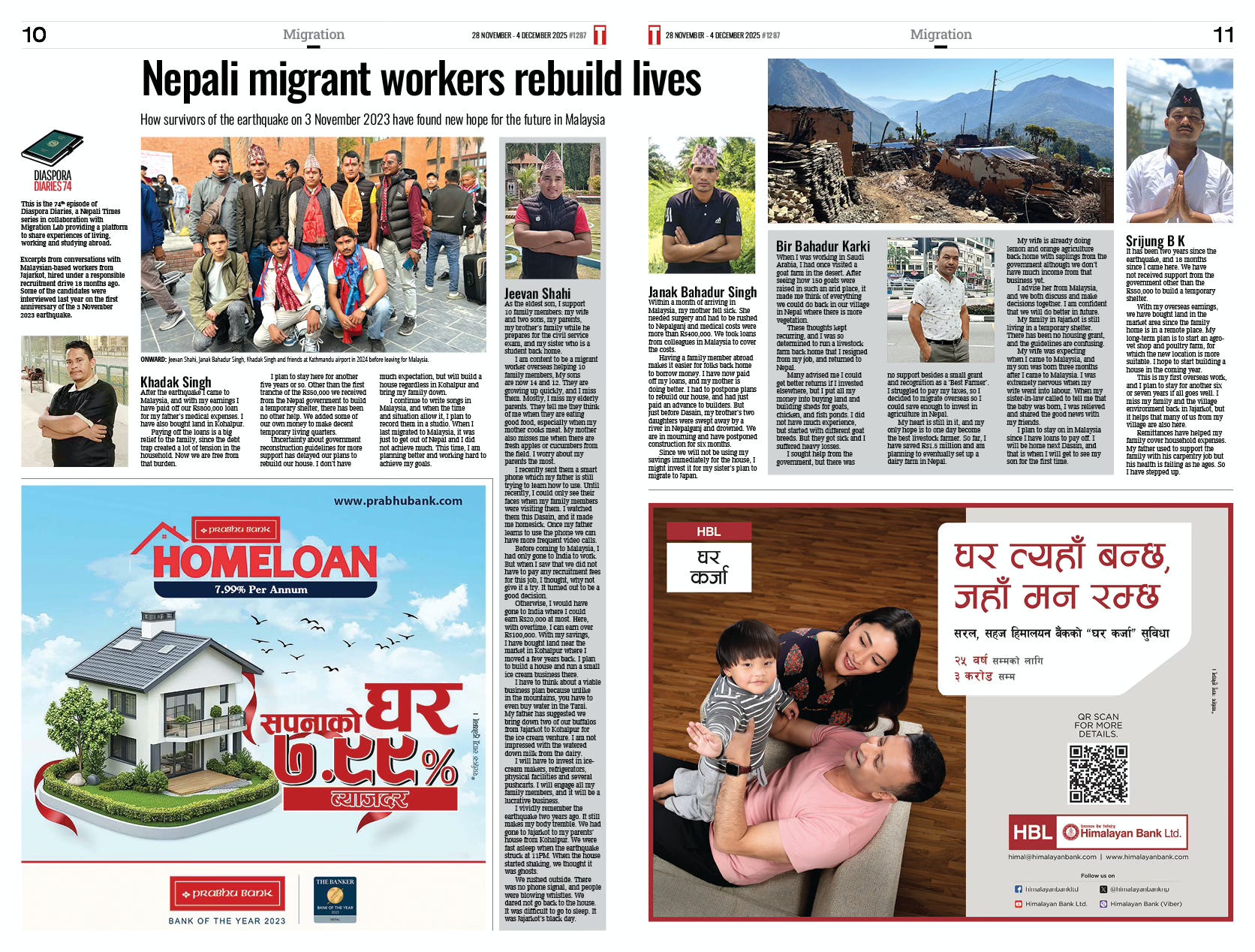
On page 1 and 5, Vishad Raj Onta gets to the bottom of this enigma: how come the country is still struggling economically when the banks are so cash-rich? (Cash Rich, But Poor) The interim government has the chance to kick start the economy by investing in a better investment climate.
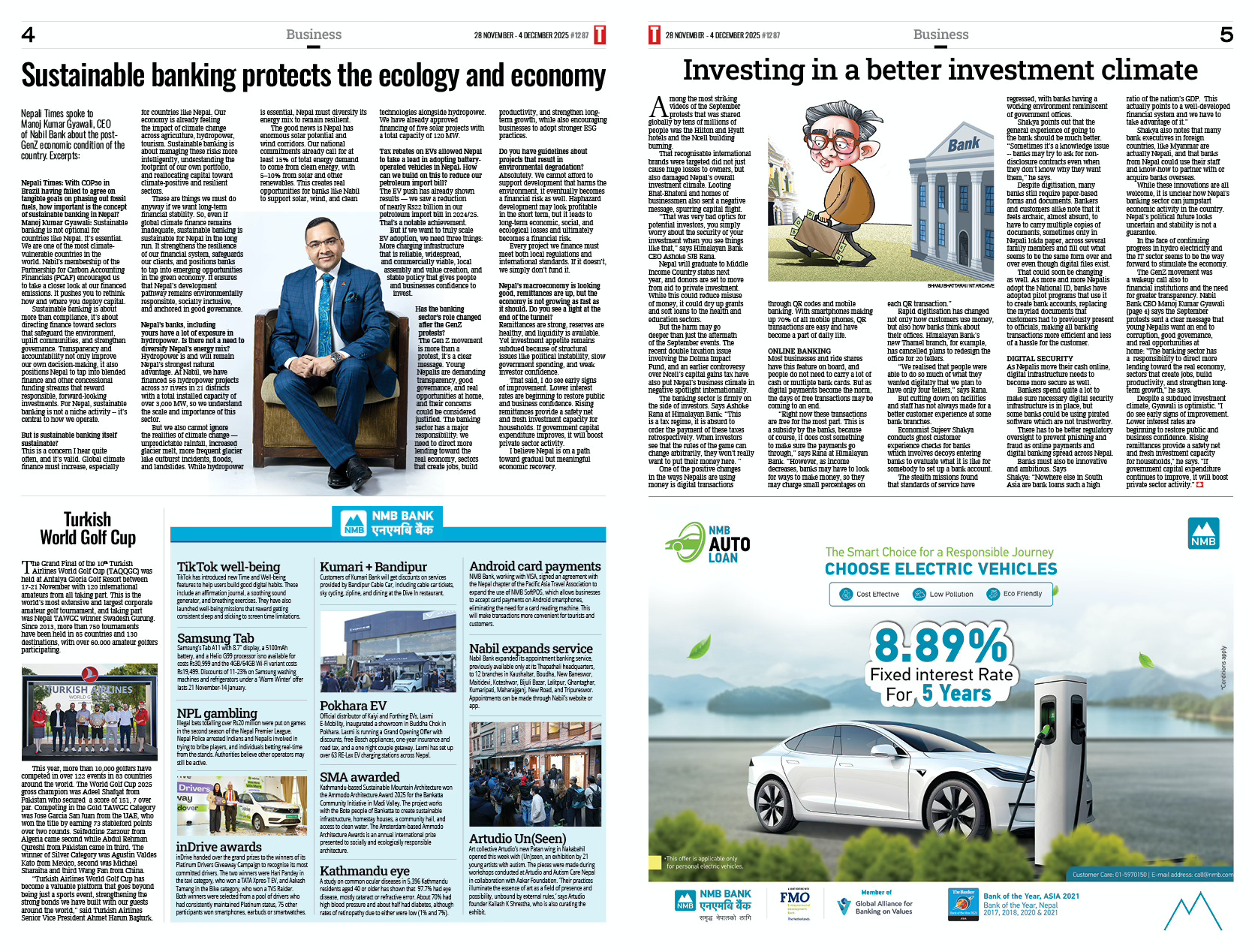
I was assigned to write this week’s Editorial on the prospects of elections in March. The gist of it is that Prime Minister Sushila Karki has to navigate a minefield between GenZs who want former prime minister K P Oli arrested for the 8 September massacre outside Parliament, and the need to avoid supporters of the previous regime to take to the streets. She understands that Oli understands her priority is elections, and that is why he is flexing his muscles with rallies and threats to prevent his arrest. (Election vs Escalation, page 2)
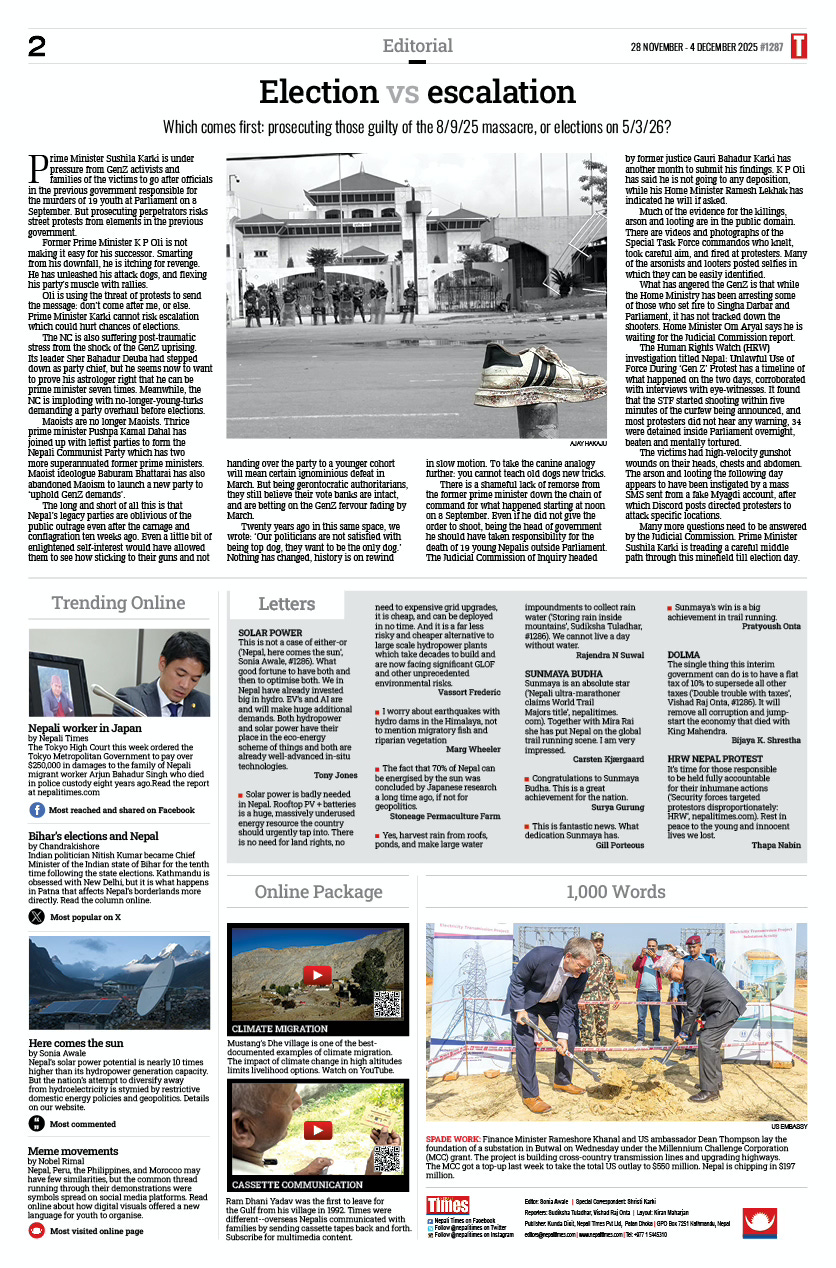
The latest episode of Upasana Khadka’s Labour Mobility column looks at the need to make migration as accessible, affordable and hassle-free for Nepalis at a time when labour markets are constricted with Malaysia and UAE limiting permits (Living and Leaving, page 9). And the 74th edition of Diaspora Diaries presents an example of how cost-free migration of survivors of the Jajarkot earthquake two years ago has transformed the livelihoods of their families back home (Nepali Migrant Workers Rebuild Lives, page 10-11).
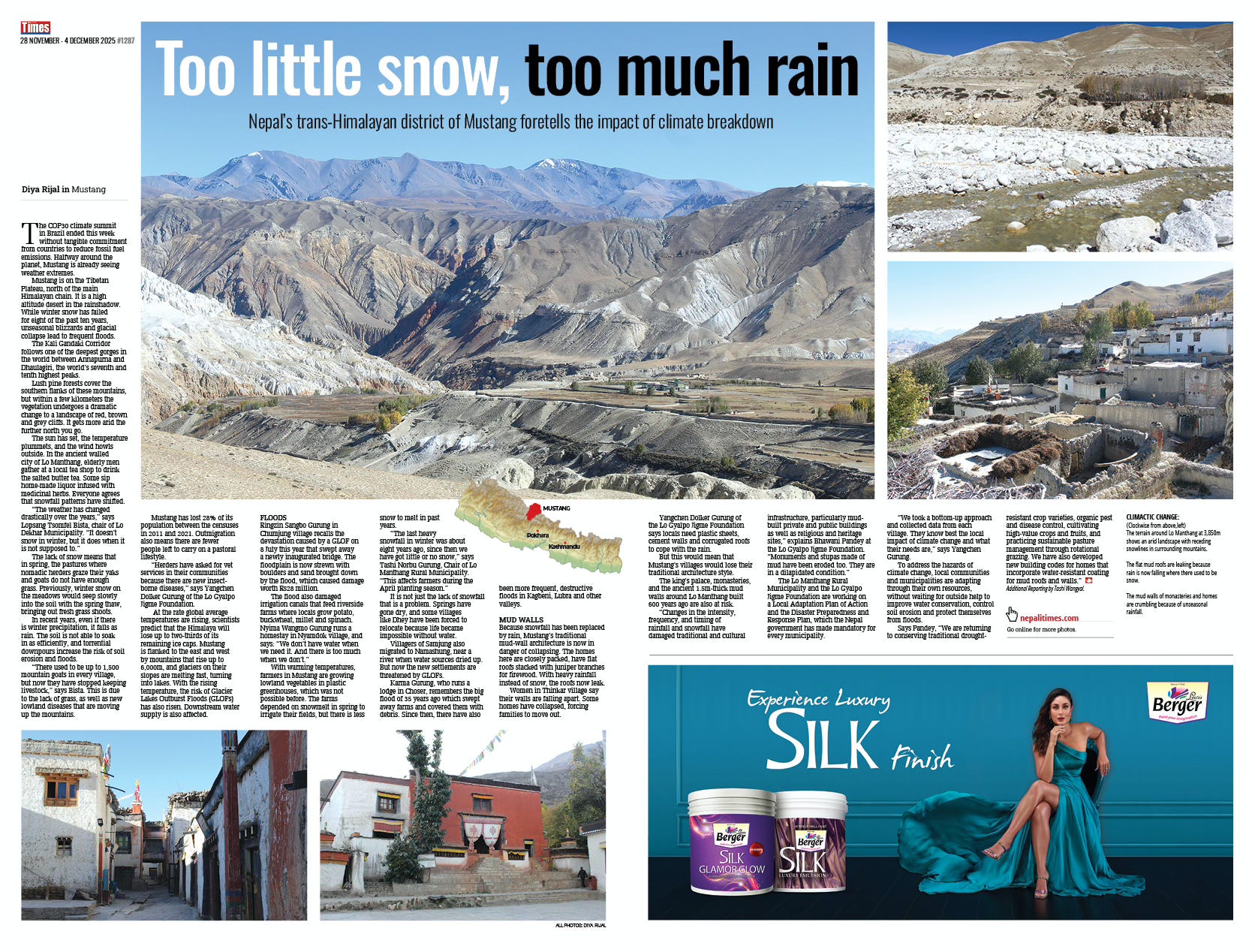
With few tangible outcomes from COP30 in Brazil last week, Diya Rijal travels to Mustang to see how continued fossil fuel use could make weather extremes there much worse. (Too Little Snow, Too Much Rain, page 6-7).
Once more we profile Sunmaya Budha from Jumla who won the Ultra-Trail Cape Town 100km race this month. Hats off to Sunmaya’s fifth gold medal. (Sunmaya wins World Trail Majors Title, page 12)

Thanks for asking, but no, we have not forgotten about cricket. Next week the newsroom is preparing a rundown of the half-way point of the Nepal Premier League.
Howzzzat?
Kunda Dixit