
Own Goal
Nepali Times ईspecial 17 - 23 July 2026 #1320
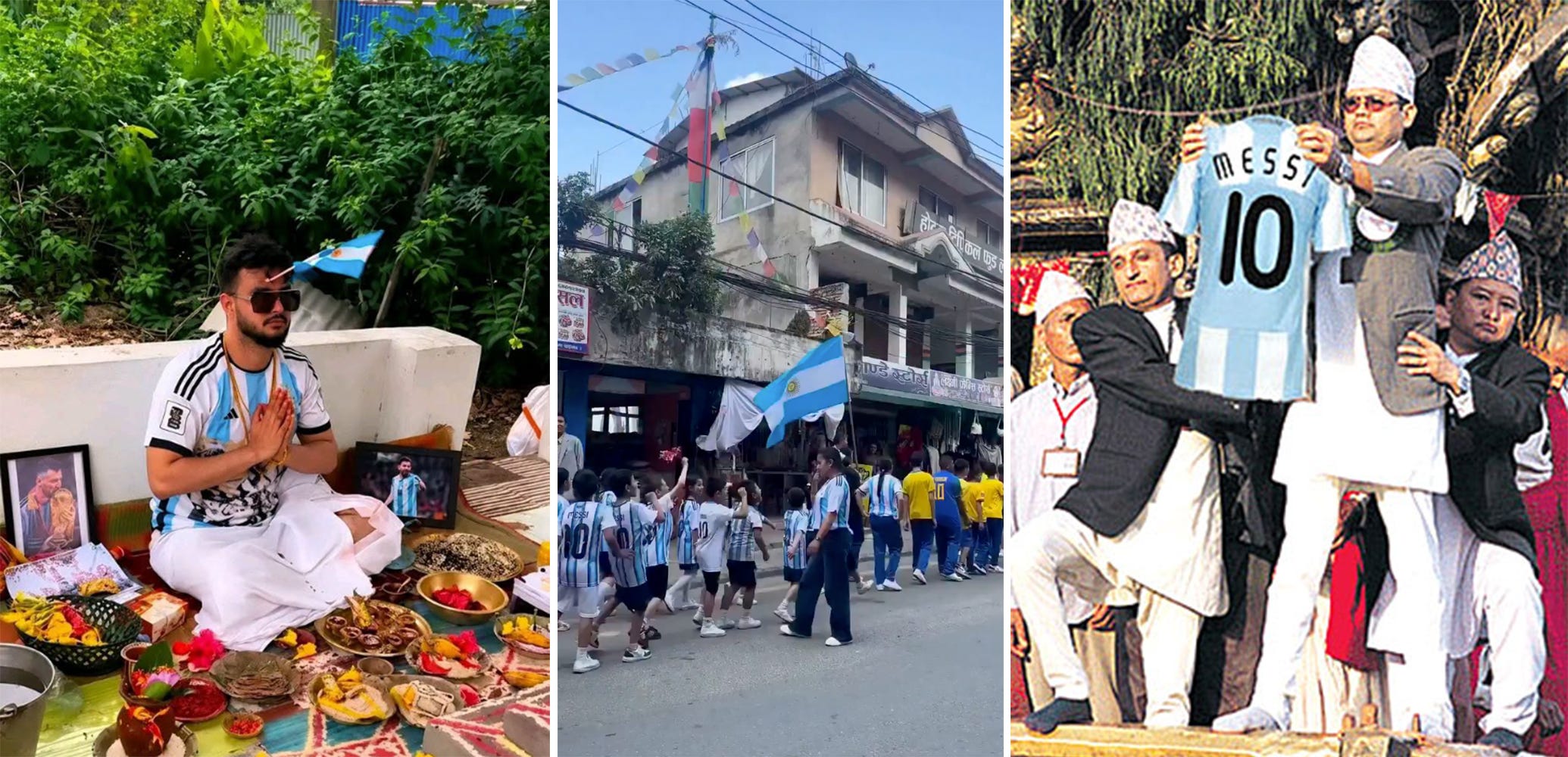
Wherever in the world you are, you will be getting ready to watch the grand finale of the World Cup entre el equipo argentino y los españoles.
Here in Kathmandu, we can be sure that not many people will be on the road Monday morning. There is no doubt which side Nepalis are on. ¡Vamos, vamos, Argentina!
In Jhapa, a fan has been doing an extended yagya prayer session asking for divine intervention so Lionel Messi can score a bunch of goals against Spain. A teacher in Dolakha took his Grade 8 students, all wearing Argentina’s #10 t-shirts, on a rally around town to boost the morale of the Argentine team.
Nepal should just declare a national holiday on Monday in celebration if Argentina wins, and a day of national mourning with flags at half-mast if it loses. And since we Nepalis love putting up statues, there should be one of Messi erected at Dasrat Rangasala.
Thank goodness the US and Iran are not getting to play in the finals. It would be war. Wait. They are already at war. Also glad Brazil did not qualify to play in the finals against the Argies.
That is because Nepalis are split right down the middle -- not between pro- and anti-Balen folks, not between monarchists and republicans, not even between those who like buff momos and those who don’t – but between die-hard fans of Brazil and die-hard fans of Argentina.
It is territorial. For example, while Thimi is for Argentina, neighbouring Dadhikot is Brazil territory. Butwal is Buenos Aires and Surkhet is São Paulo. Cities, neighbourhoods, and even families, are split Canarinho vs Albiceleste.
In past World Cups, Argie fans have even got into gang fights with the Brazilians in Lokanthali over a controversial referee penalty decision.
However much we try to keep sports apolitical, as our page 1 content shows, this World Cup has been all about countries playing political football. After all, footie has a long colonial history. It became a symbol of British imperialism, but the colonies also took up the sport as a form of resistance.

I had always wondered why football never took off in India, and the answer is in this story: in 1911 Mohan Bagan Sports Club (playing barefoot) defeated the East Yorkshire Regiment 2-1 in a friendly in front of a 60,000 crowd of cheering fans. That inspired the Indian independence movement, and the British diverted the attention of Indians to cricket. Hmmm.
Ironies abound. On Sunday at 1145 Central Daylight Time in Colorado, British Gurkha veteran Hem Shrestha, 80, who fought the Argentinians in the Falklands War 45 years ago, tells us he will be cheering for Messi (page 1).
Meanwhile, on terra firma in Nepal, the RSP government seems to be scoring some own goals. In this week’s Editorial, Shristi Karki takes stock (Right of Way, page 2) of how Prime Minister Balendra Shah’s government reacted to the self-immolation of ride-sharing driver Ganesh Nepali by getting loyalists to block the gates of media companies with illegally parked cars. Such show-’em tactics have become the hallmark of this administration.
On page 5, Nobel Rimal analyses public Facebook posts by Balendra Shah between 2022 and now. It shows that although the prime minister does not post as much as he used to while mayor, he gets much more engagement. Also, his three most laughed-at posts mock a named opponent (Face-to-Face with Balen on Facebook).

And Reporter Vishad Raj Onta talks to women politicians and activists about how they deal with sexist and toxic online trolling and threats (Punishing Women Who Speak Out, page 4). As elsewhere, women face much more online abuse than men.
In case you had not noticed, Nepal has a Minister of Innovation, and he is no other than Magsaysay-winner Mahabir Pun. But Yugottam and Yugeshwar Koirala caution that innovation needs to be backed up by quality education, institutions and efficient policy implementation (Innovation Does Not Just Happen, page 9).
This issue of Nepali Times is a Migration Special. The centerpiece has two new instalments of Diaspora Diaries (Lands of Milk and Honey, page 6-7) produced jointly with Migration Lab. The first one is by Janak Bastakoti who starts out as a construction worker, gets into livestock farming in Saudi Arabia and is now making a new life in a dairy farm in New Zealand. And Lok Bahadur Rai cleaned airplane toilets in Qatar for years before returning to Nepal to start a thriving beekeeping venture to be a recipient of the Labour Ministry’s Outstanding Entrepreneur National Award.
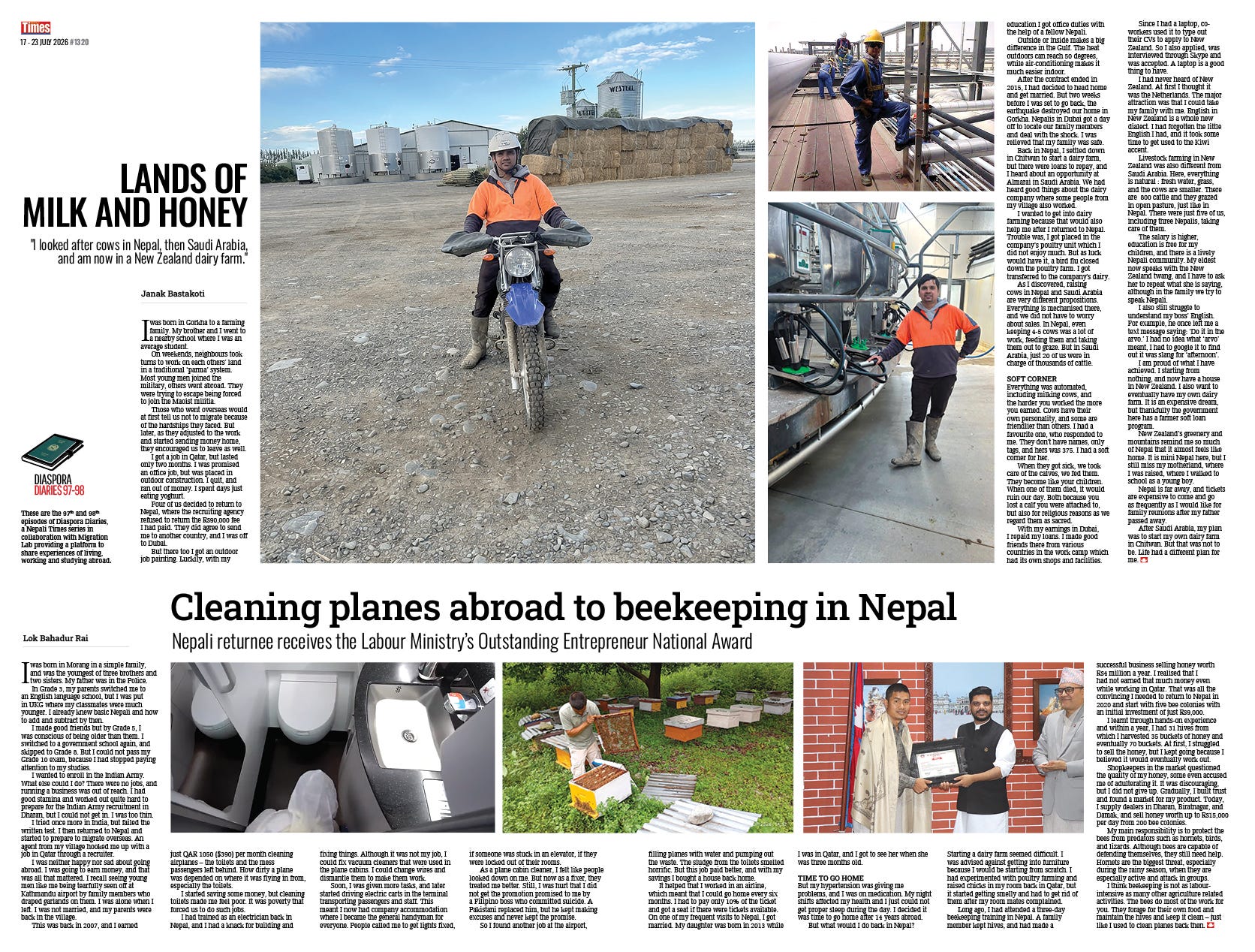
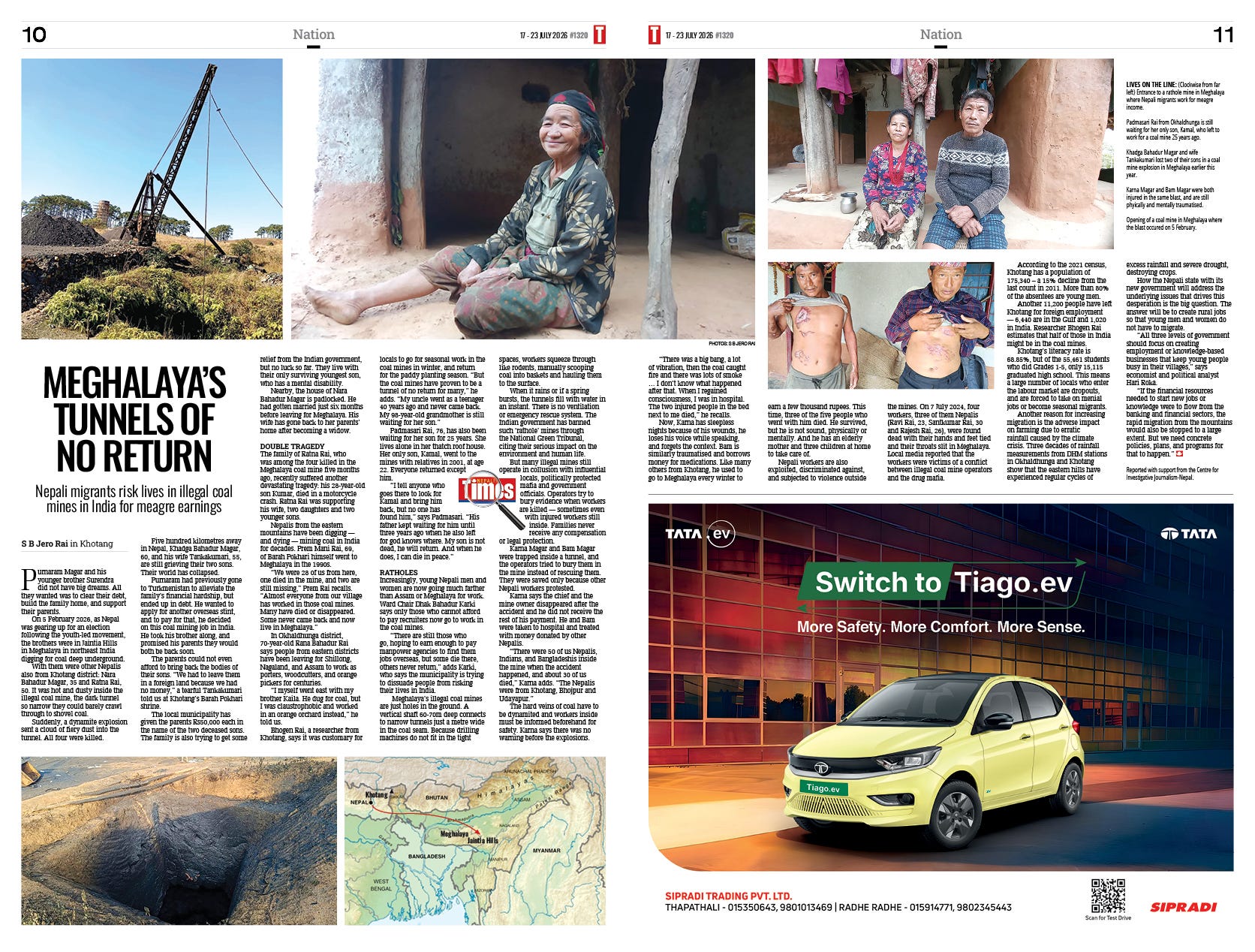
Not as positive is the story on page 10-11 by S B Jero Rai of the Centre for Investigative Journalism Nepal, about young men from Khotang who have been killed, wounded or have disappeared in the illegal coal mines of Meghalaya (Meghalaya’s Tunnels of No Return).
That’s it for this week. Whoever wins the World Cup Finals, I’m taking Monday off.
Kunda Dixit