

के छ?
Whoever was the event choreographer of KingG’s return to Kathmandu last week showed pure genius. The ex-kingji was not returning from anywhere, just flying in from Pokhara. But the Leni Rifenstahlesque spectacle of a saviour descending from the skies and being greeted by wild throngs on the streets may as well have been designed as a replay of The Triumph of the Will.
So, Nepalis once more may have to choose between absolute anarchy or absolute monarchy. Gauging the public exasperation with the democratic triumvirate since 2008, KingG seems to want to strike while the iron is hot, and the irony is that pressure to rollback Nepal’s secular, federal republican constitution seems to reflect regime change Down South.
A recent poll in India showed that 79% of Indians think that getting rid of the monarchy in Nepal was a bad idea. It looks like there are more monarchists in India than in Nepal. And if they cannot change their secular republican constitution there, they might as well do it here.
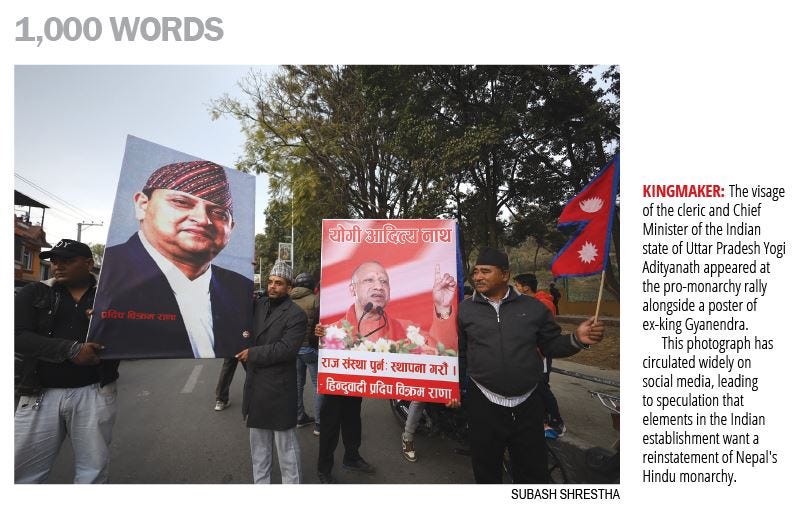
Maybe just making Gyanendra Nepal’s first president back in 2015 would have saved us all this heartburn. Now, look at what we might have to do: re-erect all the statues of kings that were knocked down, and knock down all the new statues of deceased party leaders that have been put up.
The Rs500 bank notes may have to get rid of Mt Everest again, and reinstate KingG wearing a Bird of Paradise plume. The ‘Royal’ will have to be repainted once more on Nepal Airlines jets, which could be quite an undertaking given that the flag carrier has still not got rid of the Visit Nepal 2020 logo after 5 years.
If all this looks like a reverse motion movie, for a more sober analysis of The Royal Rally and what it means, turn to page 1 in this week’s edition of Nepali Times. Shristi Karki summarises it: ‘For what it’s worth, Gyanendra has done one thing: he has united the fractious leaders of the democratic parties…’ (Also online: The Ghost of Monarchy Returns to Haunt Nepal).
In a viewpoint that has much relevance for Nepal, the former Minister of Foreign Affairs of Spain, Ana Palacio writes an upbeat op-ed about the rise of India on the world stage and why the West needs to engage and pay attention, not by asking New Delhi to be its proxy but to treat it as an equal (India has Arrived, page 4).
Nepal’s Finance Minister and the Mayor of Pokhara were badly burned last month when hydrogen-filled balloons they were setting aloft amidst fireworks exploded. They were immediately airlifted to Kirtipur Hospital that specialises in burn injury treatment. Two years ago, MP Chandra Bhandari was severely injured in a kitchen fire. He was also medevaced at state expense to Mumbai for treatment, and that saved his life. These high profile accidents have drawn attention to the ‘burning’ need for treatment centres at least in each province since each year, 2,200 Nepalis die of burn injuries. Read full investigation by Marty Logan (A Burning Problem that Needs Solutions, page 10-11).
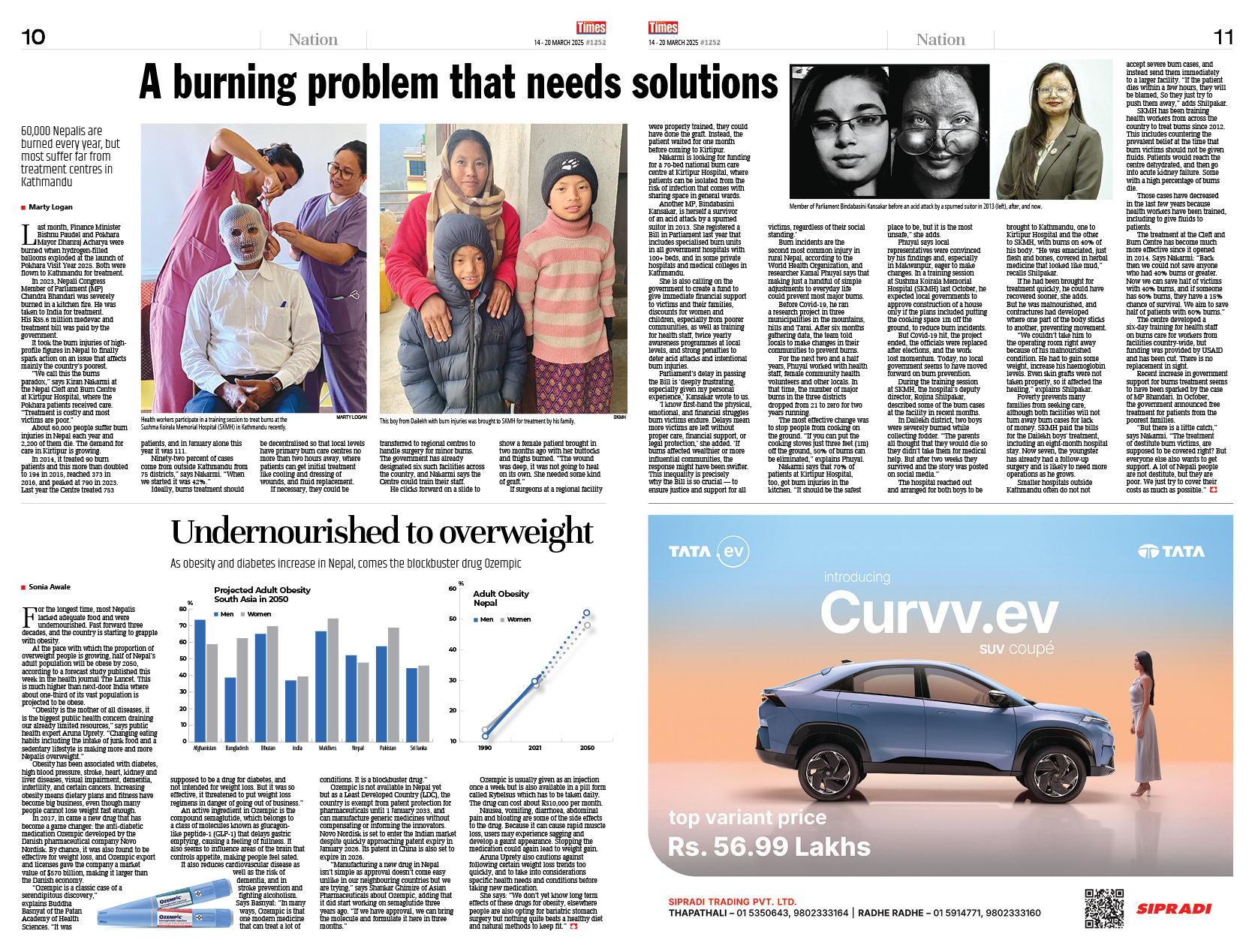
Till 30 years ago, a large proportion of Nepalis were undernourished. Now, they are obese. At this rate, half of the country’s adult population will be overweight by 2050. And with it there will be a rise in diabetes. Sonia Awale investigates if the 'blockbuster' drug Ozempic could be an antidote, since its patent expires soon (From Undernourished To Overweight, page 10).
Go to page 8-9 for happenings around town with events like the Manjushree Trail Race, dining, getaway suggestions and weather forecast.

ल है त।
Kunda Dixit